

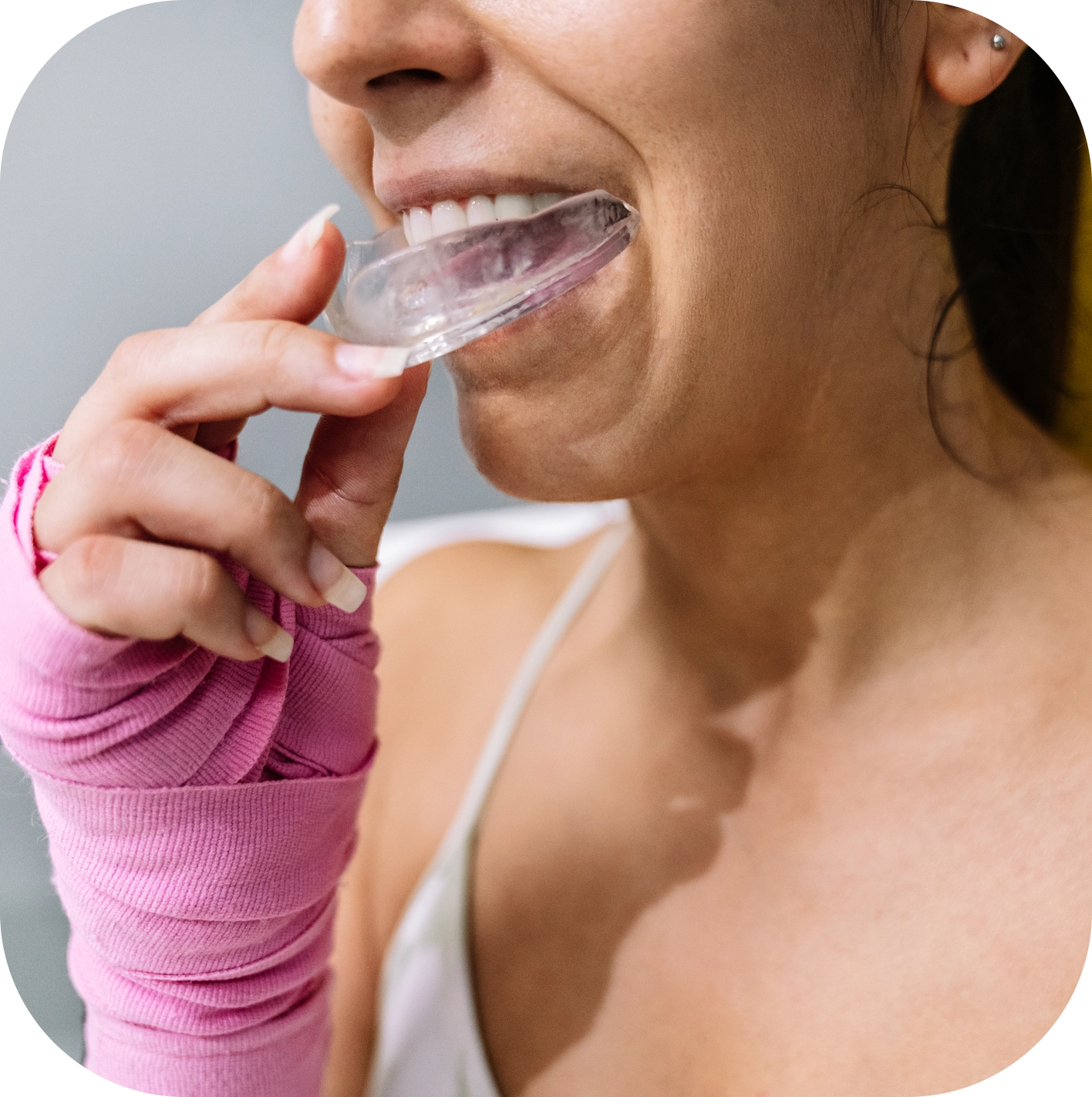
Which Type of Mouth Guard Do You Need?
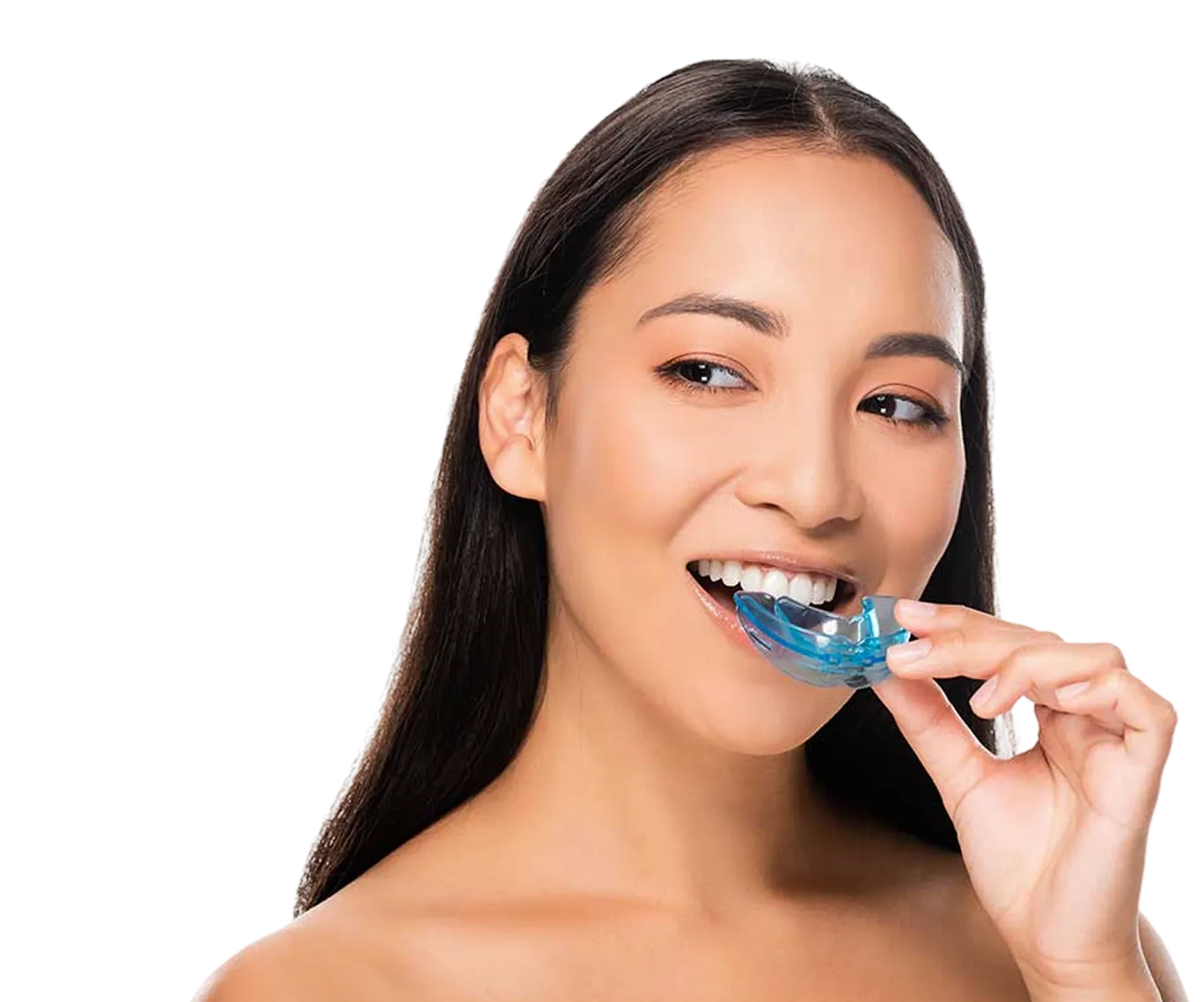
Different mouth guards and oral appliances serve different protective and treatment purposes.
Night Guards for Grinding and Clenching
Night guards help protect teeth when grinding or clenching is a concern by reducing direct contact between dental surfaces.
Sports Mouth Guards for Athletic Protection
Sports mouth guards are designed to help protect teeth from impact during sports and other athletic activities with injury risk.
Oral Appliances for Sleep-Related Breathing: A Different Device
A standard night guard differs from oral appliances used after medical diagnosis for sleep-related breathing disorders such as sleep apnea.
Retainers vs. Mouth Guards: What's the Difference
Retainers primarily help maintain tooth position after orthodontic treatment, while mouth guards serve a protective purpose. For patients who have completed Invisalign® in Westwood, we can consider these different functions when discussing appropriate post-treatment care.
Not Sure Which You Need? Start with an Evaluation
A dental evaluation helps identify the appropriate appliance based on the concern, intended use, and relevant dental findings.
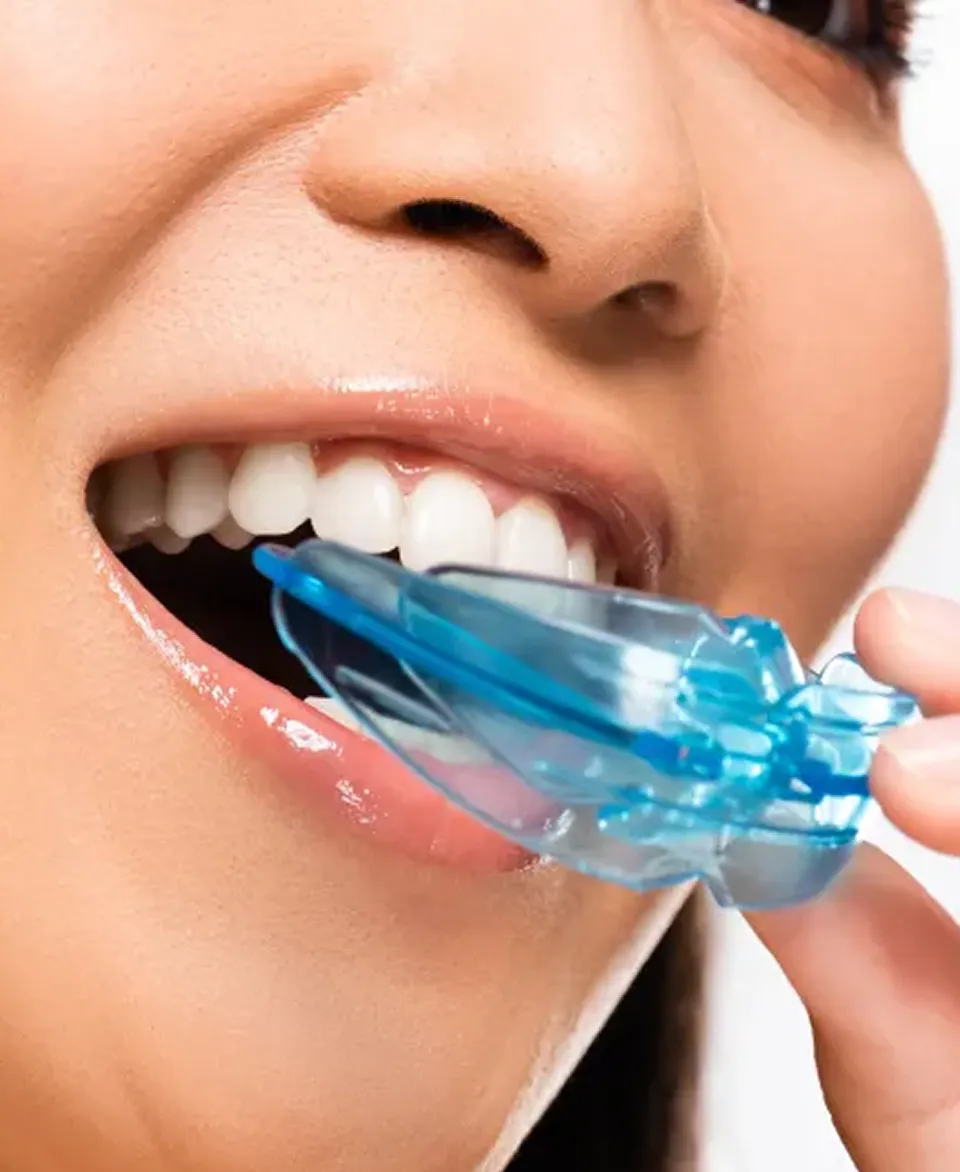
Custom Mouth Guards vs. Store-Bought and Mail-Order Options
The meaningful differences among mouth guards extend beyond thickness or price. Fit, intended use, dental evaluation, appliance design, existing dental work, and access to professional fit checks or adjustments all affect how appropriately a guard serves its intended purpose.
Why Fit and Design Matter Alongside Thickness
Thickness can influence how a mouth guard feels and functions, but fit and design also matter. A guard should seat securely, provide appropriate coverage, and work with the teeth and bite as intended.
Boil-and-Bite and Stock Guards: What They Can and Can't Do
Stock and boil-and-bite guards provide accessible protective options for some uses. Unlike dentist-directed custom care, these options generally do not include a direct dental evaluation or professional fit check.
Mail-Order Impression Kits vs. Professional Dental Fitting
Mail-order guard services use remote workflows that can include patient-completed impressions. Dentist-directed care adds direct evaluation, professional fit checking, adjustment when needed, and guidance on appliance use and care.
How a Poorly Fitted Guard Can Create Problems
A guard that does not seat properly, becomes uncomfortable, changes how the bite feels, or is associated with new or worsening jaw symptoms should be evaluated rather than modified at home. If the concern appears to extend beyond appliance fit, we can evaluate the jaw and joint more broadly and discuss whether TMJ treatment should be part of the next step
Professional Adjustment and Follow-Up
Westwood Dental Esthetics checks mouth-guard fit and may recommend follow-up to review comfort, wear, fit, the bite, or changes in how the appliance feels or functions over time.
Custom, Store-Bought, and Mail-Order Mouth Guard Comparison
| Consideration | Custom Dental Mouth Guard | Boil-and-Bite / Stock Guard | Mail-Order Guard |
|---|---|---|---|
| Fit Approach | Dentist-Directed Customization and Professional Fit Checking | Preformed Stock Fit or User-Shaped Boil-and-Bite Fit | Can Involve a Remote or Self-Impression Workflow |
| Bite / Dental Evaluation | Direct Dental Evaluation Can Consider Relevant Teeth, Bite, Wear, Symptoms, and Existing Dental Work | Usually Selected without Direct Dental Evaluation | Clinical Involvement Varies by Service Model |
| Material and Design Options | Considered as Part of Dentist-Directed Appliance Planning | Product-Specific | Product- and Provider-Specific |
| Coverage Design | Determined by the Selected Appliance and Clinical Needs | Depends on the Specific Product | Depends on the Specific Appliance Design |
| Durability | Varies with Design, Use, Wear, and Applied Forces | Product-Dependent and Should Be Monitored for Wear | Product-Dependent and Should Be Monitored for Wear |
| Professional Adjustment | In-Person Fit Checking and Adjustment When Needed | No Dentist-Directed Adjustment Unless Separately Arranged | Adjustment Options Vary; In-Person Dental Adjustment May Not Be Included |
| Clinical Oversight | Direct Professional Involvement, with Follow-Up When Appropriate | Oversight Varies by Provider and Service Model | Oversight Varies by Provider and Service Model |
| Existing Dental Work | Can Be Considered During Dental Evaluation and Fitting | Usually Not Individually Assessed Before Purchase | Consideration Varies by Provider and Workflow |
| Cost Considerations | Includes Professional Evaluation, Customization, and Fitting | Primarily a Direct Product Purchase | Uses a Remote Purchasing and Service Model; Actual Costs Vary |
Why Choose Westwood Dental Esthetics for Your Mouth Guard?
Westwood Dental Esthetics combines custom planning, professional fitting, verified credentials, and broader dental care.
Custom Planning Based on Your Teeth, Bite, and Intended Use
We plan custom mouth guards with the patient's teeth, bite, intended use, wear patterns, and existing dental work in mind.
Professional Fit Checks and Ongoing Monitoring
Our team checks mouth-guard fit and may recommend follow-up to review the guard, bite, tooth condition, comfort, wear, or functional changes.
Dr. Kaivan Kiai's Verified Dental Education and ADA Affiliation
Dr. Kaivan Kiai, DDS earned his DDS from the Herman Ostrow School of Dentistry of USC and is a member of the American Dental Association.
Care for Related Dental Damage When Needed
If grinding or clenching has contributed to tooth wear, chips, or damaged restorations, our practice can evaluate whether related dental care is appropriate.
Broader Dental Care Within the Same Practice
Mouth-guard care can be considered alongside broader general, restorative, cosmetic, and TMJ-related dental concerns as part of a coordinated treatment plan.
A Westwood Blvd Dental Practice
Westwood Dental Esthetics provides local dental care from its Westwood office at 1964 Westwood Blvd. Suite 250, Los Angeles, CA 90025.
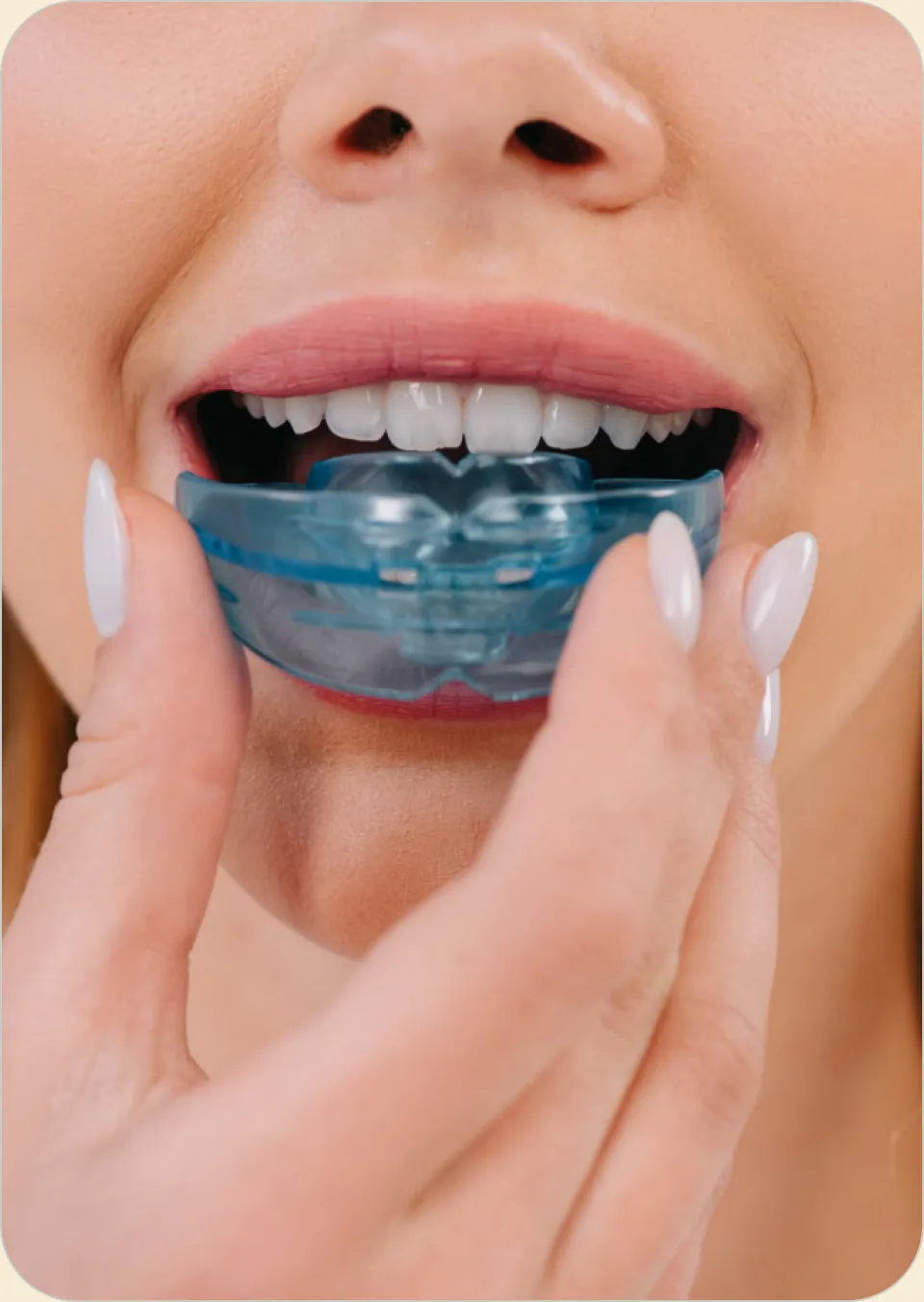
Signs You May Be Grinding or Clenching Your Teeth
Grinding or clenching can leave dental or muscle signs without obvious awareness.
Morning Jaw Soreness and Facial Tension
Jaw muscle soreness or facial tension after waking can accompany grinding or clenching. If these symptoms persist or involve the jaw joint, we can assess them more closely. You can also learn more about our approach to TMJ treatment in Westwood.
Headaches That Start Near the Temples
Morning or temple-area headaches can sometimes accompany jaw-muscle activity associated with grinding or clenching, but they do not confirm the habit.
Flattened, Chipped, or Worn Tooth Edges
Repeated tooth-to-tooth forces associated with grinding or clenching can contribute to flattened, chipped, or visibly worn tooth edges over time.
Increased Tooth Sensitivity
Sensitivity can accompany tooth wear or other dental changes, particularly when it occurs alongside other findings that warrant dental evaluation.
Cracked Fillings, Crowns, or Restorations
Repeated grinding or clenching forces can stress teeth and existing restorations, but a cracked filling or crown alone does not establish the cause.
A Partner Who Hears Grinding at Night
A partner may notice grinding sounds during sleep even when you are unaware of them, while silent clenching may produce no sound.
Why Many People Clench Without Knowing It
Clenching can occur without obvious sound or conscious awareness, so dental findings or recurring symptoms may be what first prompt evaluation.
Night Guards for Teeth Grinding and Clenching
Night guards help protect teeth from forces associated with grinding and clenching.
What a Night Guard Actually Does
A night guard creates a physical barrier between opposing dental surfaces, helping reduce direct tooth-to-tooth contact during grinding or clenching.
What a Night Guard Doesn't Do: Protection Is Not a Cure
A night guard primarily protects teeth; it does not eliminate grinding or clenching or treat the underlying reason the habit occurs.
Common Contributors to Grinding and Clenching
Grinding and clenching can occur in different contexts, including stress and sleep-related factors, but those associations do not establish an individual cause.
Helping Protect Teeth From Wear and Fracture
Repeated grinding or clenching forces can contribute to tooth wear and damage, while a night guard helps reduce direct tooth-to-tooth contact.
Helping Protect Teeth and Existing Dental Work
A night guard can also help protect teeth and existing restorations from repeated forces associated with grinding or clenching.
When Grinding Points to a Larger Bite or Joint Issue
Persistent jaw pain, joint symptoms, or bite changes may warrant broader evaluation through TMJ treatment rather than relying on a night guard alone.
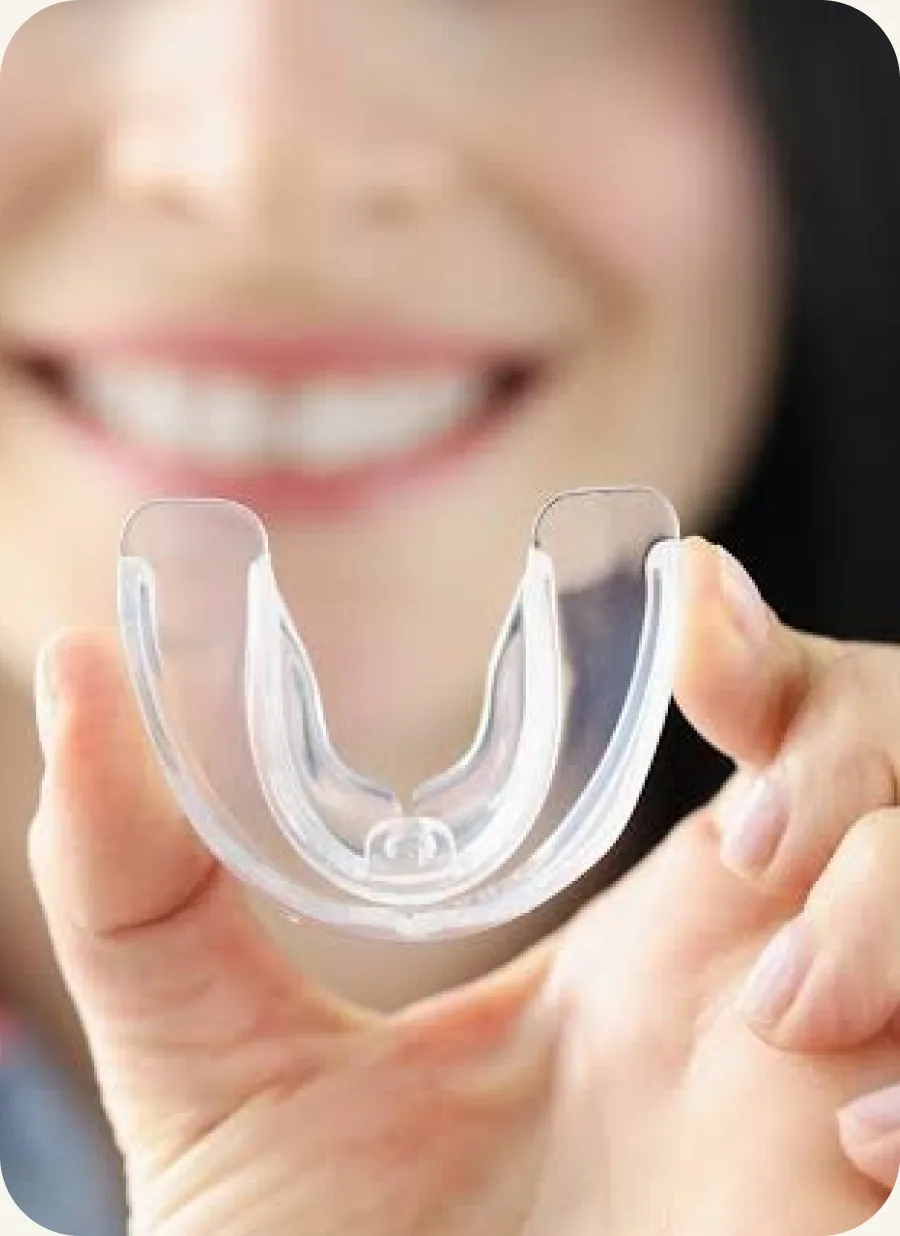
Night Guard Materials and Designs
Night guards can differ in material, rigidity, arch, and coverage based on clinical considerations.
Soft Guards: When They're Appropriate
Soft guards use flexible materials that can provide cushioning in selected situations, with suitability determined by broader clinical needs.
Hard Acrylic Guards for Heavy Grinding
Rigid acrylic guards may be considered when durability, stability, grinding forces, or other dental and bite considerations influence appliance selection.
Dual-Laminate Guards: Comfort with Durability
Dual-laminate guards combine layers with different material characteristics, providing a design that incorporates both flexibility and structural support.
Upper vs. Lower Arch Guards
Night guards can be designed for either dental arch, with selection based on bite relationships, appliance requirements, and other clinical considerations.
Why Coverage Design Matters
Some partial-coverage designs can contribute to unintended bite or tooth-position changes, making appropriate coverage and professional monitoring important.
How Material and Design Are Selected
Material and design selection can consider bite, tooth wear, existing restorations, and intended use during broader general dentistry.
Sports Mouth Guards in Westwood
Sports mouth guards provide athletic protection distinct from night guards used for grinding.
Why Custom Athletic Guards Offer More Individualized Protection
Custom athletic guards account for dental anatomy, intended activity, and professional fitting rather than relying on generalized sizing alone.
Protecting Against Dental Injury During Contact Sports
Sports mouth guards help protect teeth and surrounding oral structures by cushioning impact during activities with a risk of dental injury.
Mouth Guards for Athletes with Braces or Aligners
Athletes receiving orthodontic treatment in Westwood, including those with braces or removable aligners such as Invisalign®, should consider how mouth-guard fit works with their ongoing treatment.
Guards for Children and Teen Athletes
Younger athletes may need sports-guard considerations that account for changing teeth, oral growth, fit, and the demands of their activity.
Fit, Breathing, and Speech During Play
Secure fit helps a sports guard stay positioned during activity while supporting practical breathing and communication during play.
Replacing a Sports Guard as a Young Athlete Grows
Fit should be reassessed as a young athlete's teeth or oral structures change, or when the guard becomes worn or damaged.
Mouth Guards and Sleep: An Important Distinction
Nighttime dental appliances can serve very different protective and therapeutic purposes.
A Night Guard Is Not a Treatment for Sleep Apnea
A standard night guard for grinding or clenching does not treat sleep apnea, snoring, or impaired breathing during sleep.
How Sleep Apnea Oral Appliances Differ
Sleep apnea oral appliances are distinct therapeutic devices designed to influence upper-airway relationships rather than simply protect opposing dental surfaces.
Why Sleep-Related Breathing Concerns Need Medical Evaluation
Persistent snoring or suspected sleep apnea warrants evaluation by an appropriate medical provider before sleep-apnea treatment decisions are made.
For more information about dental care related to diagnosed sleep apnea, learn about Sleep Apnea Treatment in Westwood.
Grinding and Sleep: Why Both May Warrant a Conversation
If you have concerns about grinding or clenching, we can evaluate them as part of general dentistry in Westwood. Suspected sleep-related breathing problems, however, require appropriate medical evaluation.
Getting a Custom Mouth Guard at Westwood Dental Esthetics
Getting a custom mouth guard involves evaluation, customization, fitting, and care guidance.

Exam and Bite Evaluation
We evaluate your concerns, relevant teeth, bite, wear, and existing dental work to guide appropriate planning for a custom mouth guard.

Creating the Records Needed for Your Custom Guard
Records needed for customization are obtained based on the planned appliance, and impressions may be taken when clinically appropriate to support appliance planning.

Selecting the Appropriate Appliance Design
Appliance planning considers intended use, relevant dental findings, bite relationships, wear, and existing dental work when determining appropriate design considerations.

Fit Check and Use Guidance
Westwood Dental Esthetics checks the completed mouth guard for fit and provides guidance on appropriate use and care.

Follow-Up and Comfort Check
Follow-up may be recommended to review comfort, fit, wear, or changes in how the mouth guard feels or functions over time.

When Your Guard Is Ready to Use
Once the completed mouth guard has been checked for fit and use and care instructions are provided, it can be worn as directed.
Caring for Your Mouth Guard
Routine care helps keep your mouth guard clean and usable.
Daily Cleaning and Rinsing
Rinse the guard after use and clean it according to the care instructions provided for your appliance.
What Not to Use on Your Guard
Avoid hot water, excessive heat, and cleaning methods that conflict with your appliance-specific care instructions.
Proper Storage Between Uses
Store the guard in an appropriate protective container and keep it away from excessive heat between uses.
Signs Your Guard Needs Replacing
Reassessment may be appropriate if the guard becomes worn, damaged, cracked, or no longer fits as expected.
How Long Does a Custom Guard Last?
There is no universal lifespan; replacement depends on fit, wear, damage, dental changes, and forces placed on the appliance.
Bringing Your Guard to Dental Visits
Bring your guard to routine dental visits so we can review its fit, wear, and overall condition.
My Mouth Guard Isn't Working, What Now?
Discomfort, poor retention, damage, or bite changes warrant evaluation rather than home modification.
Your Guard Is Uncomfortable or Doesn't Stay In
A guard that feels uncomfortable, loose, or no longer seats properly should have its fit professionally evaluated before further decisions.
You're Still Waking Up with Jaw Pain
Persistent morning jaw pain warrants broader assessment rather than assuming continued guard use or another appliance will resolve it.
Your Guard Cracked or Wore Through Quickly
A cracked or substantially worn guard should be assessed for condition, fit, wear patterns, and relevant dental findings before replacement.
Your Bite Feels Different After Wearing It
A persistent bite change after guard use warrants evaluation of jaw and bite concerns without assuming the appliance caused it.
When the Appliance Isn't the Problem
Persistent symptoms may warrant broader evaluation of jaw-joint concerns when the problem appears to extend beyond appliance fit or function.
Protecting Existing Cosmetic and Restorative Dental Work
Grinding or clenching can place additional stress on existing cosmetic and restorative dental work.
Why Grinding Matters for Veneers, Crowns, and Bonding
Repeated forces can place added stress on natural teeth, veneers, dental crowns, and bonded restorations over time.
Protecting Dental Implants from Excessive Force
For patients with implant-supported dental work, grinding or clenching forces may be considered when determining whether a protective appliance is appropriate.
Guards After Orthodontic or Cosmetic Treatment
When a guard is appropriate after orthodontic treatment or cosmetic dentistry, planning should consider tooth position, restorations, and retention needs.
How Grinding Is Considered in Long-Term Dental Planning
When grinding or clenching is relevant, our team considers those forces alongside existing restorations, tooth wear, and planned dental care.
Mouth Guard Cost and Insurance in Westwood
Custom mouth-guard cost and insurance coverage depend on the appliance, clinical needs, and individual plan terms.
What Determines the Cost of a Custom Mouth Guard
Custom mouth-guard cost can reflect intended use, clinical evaluation, customization, professional fitting, adjustments when needed, and other dental considerations.
How Dental Insurance Handles Night Guards
Coverage for a night guard or occlusal appliance varies by plan and treatment circumstances. Our team can help patients review available insurance information.
Night Guards vs. Sports Guards: Cost Differences
Night guards and sports guards serve different purposes, so their costs should not be assumed to match. Pricing can reflect intended use, appliance requirements, and the clinical care involved.
Payment Options and Flexible Plans
Westwood Dental Esthetics offers general payment and financing options for dental care. Our team can explain available options and whether they apply to your treatment plan.
Comparing Custom and Store-Bought Guard Costs
Store-bought and dentist-directed guards use different purchasing models. Custom dental care includes clinical evaluation, customization, professional fitting, and guidance.
When Grinding Has Already Damaged Teeth or Restorations
Grinding or clenching can contribute to tooth wear, chips, fractures, or restoration damage. When damage is already present, restorative dental care may be considered alongside mouth-guard planning.
Book Your Mouth Guard Consultation in Westwood
Westwood Dental Esthetics provides custom mouth-guard evaluations for grinding, clenching, sports protection, and concerns with existing appliances. From our Westwood practice, we serve patients from Westwood, West Los Angeles, Century City, Brentwood, Beverly Hills, and Santa Monica.
Westwood Dental Esthetics
- 1964 Westwood Blvd. Suite 250 Los Angeles, CA 90025
- Phone: (310) 475-1667
- Hours: Mon–Fri 8:00 am–5:00 pm | Sat–Sun Closed
This page is for informational purposes. Please consult Dr. Kiai for a personalized treatment evaluation.