

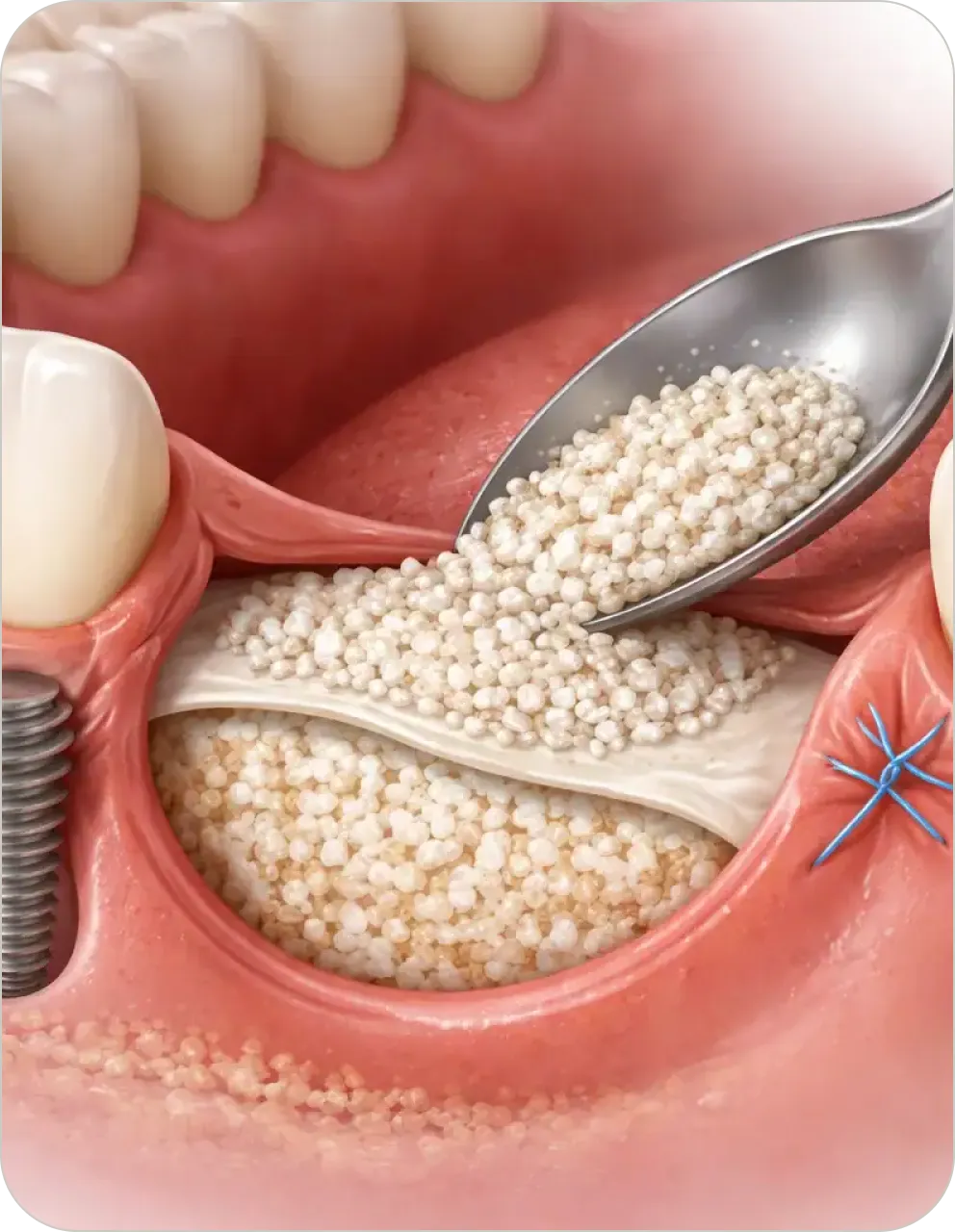
Do You Actually Need a Bone Graft?
Not every implant treatment plan requires grafting; the recommendation should depend on measurable clinical findings.
Why a Bone Graft May Have Been Recommended
A bone graft may be recommended when the treatment site lacks enough bone volume or shape to support the proposed plan. For dental implant treatment, available bone is one planning consideration, alongside local anatomy, examination findings, and the intended restoration.
How Bone Levels Are Actually Measured
Bone levels are assessed through clinical evaluation and appropriate dental imaging, with attention to the treatment site’s dimensions and anatomy. Dentists consider available bone volume, ridge shape, and nearby structures rather than relying on appearance, symptoms, or one universal measurement alone.
What 3D Imaging Shows That an X-Ray Can't
When clinically indicated, cross-sectional 3D imaging can show ridge width, shape, and anatomical relationships that two-dimensional radiographs cannot display in the same way. It can also clarify the treatment site’s relationship to nearby structures, including the maxillary sinus, when relevant.
When a Bone Graft Isn't Necessary
Not every implant-related treatment plan requires bone grafting. Augmentation may be unnecessary when the site has adequate bone for the proposed treatment, the anatomy supports that approach, or another clinically appropriate plan can be carried out without adding bone to the area.
Getting a Second Opinion Is Always Welcome
Seeking another professional evaluation before elective grafting can help clarify why it was recommended. A clinician may review appropriate existing records or imaging, assess the proposed treatment goal and available bone, and explain whether augmentation appears relevant to that specific plan.
What Happens If You Skip the Graft
If grafting is genuinely needed for the planned treatment, declining it may mean the original implant plan must change or cannot proceed as proposed. The next step may involve reassessing the site, modifying the approach, or considering another tooth-replacement option where appropriate.
Why Jawbone Is Lost in the First Place
Jawbone volume can change for several reasons, and the cause matters when planning treatment.
What Happens to Bone After a Tooth Is Removed
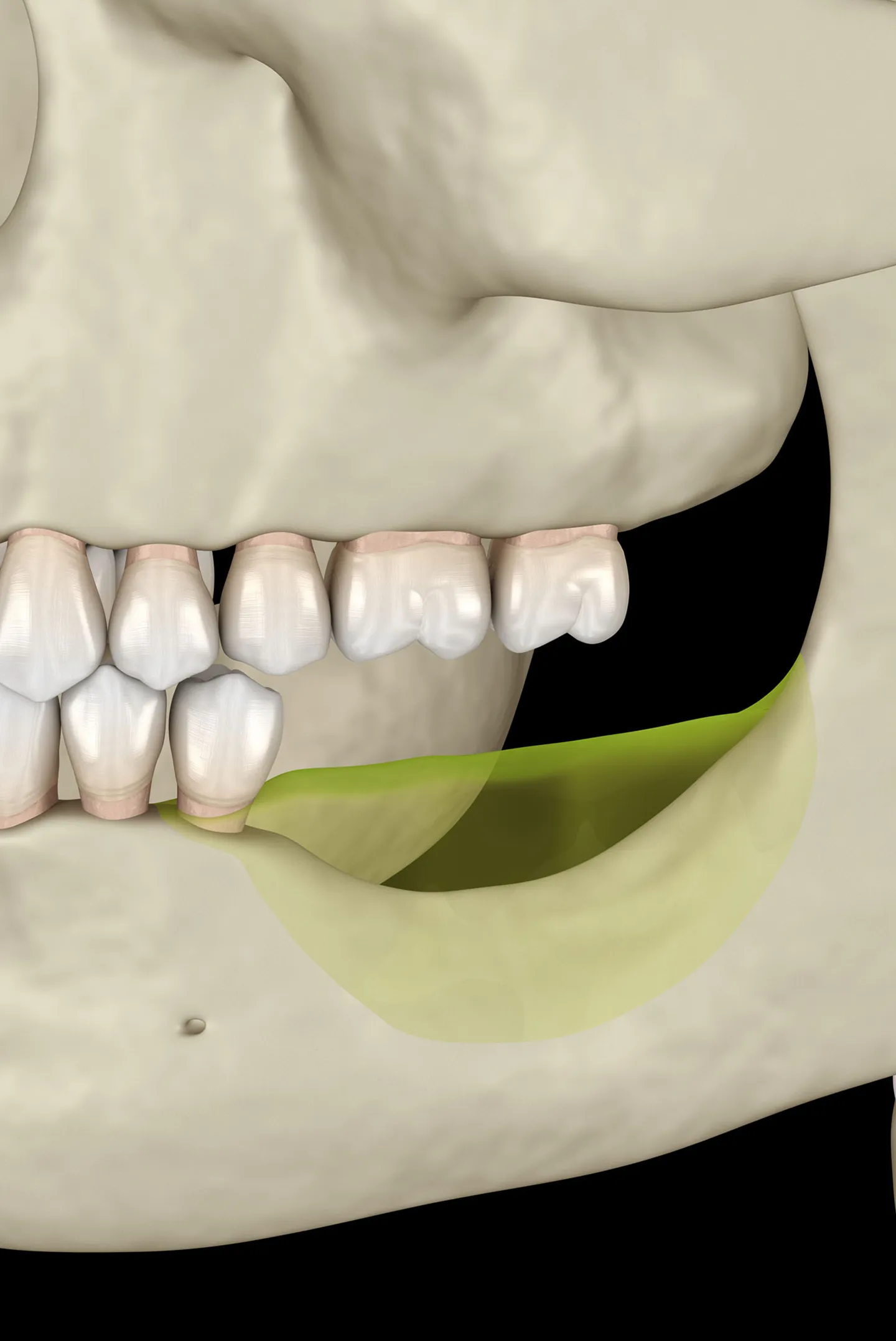
After a tooth extraction, the alveolar ridge normally remodels as the tissues that supported the tooth heal and change. Ridge height and especially width can decrease, with the most pronounced dimensional changes generally occurring earlier after removal.
Gum Disease and Progressive Bone Loss
Periodontitis can progressively damage the tissues supporting teeth, including the alveolar bone. This is different from gum inflammation alone; established periodontal disease can involve attachment and bone loss, making appropriate periodontal disease treatment relevant to preserving supporting structures.
Long-Term Tooth Loss, Dentures, and Ridge Changes
After teeth are lost, the residual ridge can continue remodeling over time. For people who use dentures and partials, these anatomical changes may gradually alter ridge form and affect how a removable prosthesis is supported or retained.
Injury, Infection, and Cysts
Trauma, some infections, and certain jaw lesions can contribute to localized bone defects. When an affected tooth can still be preserved, treatment such as root canal therapy in Westwood may address infection inside the tooth rather than requiring its removal.
Why Ridge Changes Can Continue After Tooth Loss
Ridge remodeling is generally most pronounced earlier after tooth loss but can continue more slowly over time. Someone evaluated years later may therefore have different ridge dimensions, which can affect future restorative planning and whether bone augmentation needs consideration.
What a Dental Bone Graft Actually Is
A dental bone graft is not simply a permanent replacement piece inserted into the jaw.
A Scaffold, Not a Replacement Part
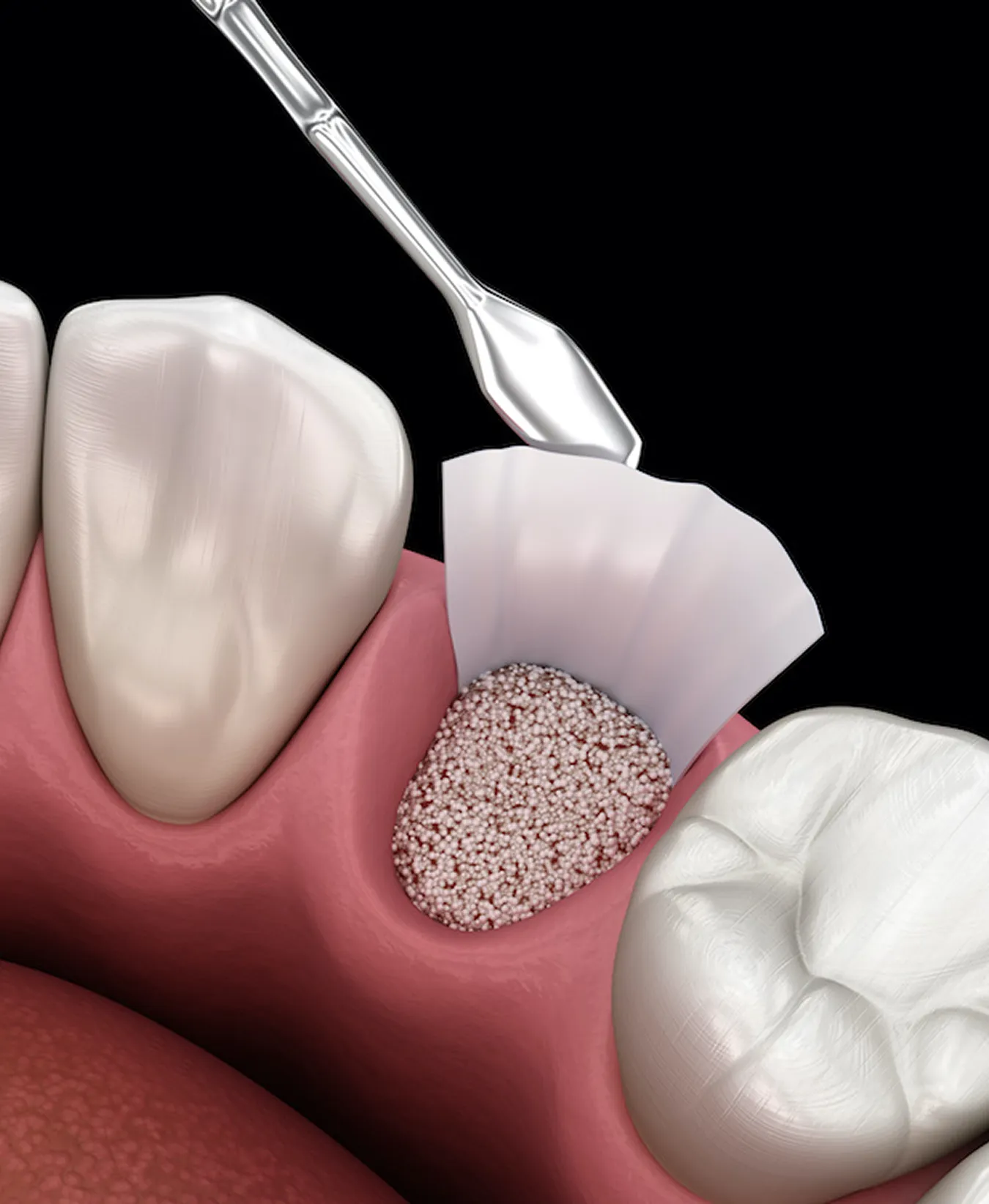
Many dental graft materials act partly as a framework that supports new bone formation at the treatment site. They are not implants or artificial jaw parts; how much graft material remodels, resorbs, or remains incorporated depends on the material and clinical situation.
How Your Own Bone Grows Into the Graft
New bone can grow into and around graft material as the site heals, supported by surrounding viable bone and tissues. The grafted area may become biologically integrated to varying degrees, while the extent of remodeling differs by material, site, and individual healing response.
What a Barrier Membrane Does
In some grafting procedures, a barrier membrane helps separate the regenerative area from faster-growing soft tissues and preserve space for bone formation. Its role is to support the intended healing environment, but membranes are technique-dependent and are not required for every bone graft.
How Much Bone Can Realistically Be Rebuilt
There is no single amount of bone that can be predictably rebuilt in every patient. For patients considering dental implants in Westwood, feasibility depends on the defect, surrounding anatomy, available native bone, grafting approach, and intended treatment plan.
What Bone Graft Material Is Made Of
Dental bone graft material can come from several different biological or synthetic sources.
Your Own Bone (Autograft)
Autograft uses bone taken from the same patient. It has useful biological properties for regeneration, but obtaining it separately may require an additional donor site and is not automatically preferable for every situation.
Donated Human Bone (Allograft) — How It's Screened and Processed
Allograft is donated human bone from another person. Donated human tissue is subject to regulated donor screening and testing requirements for relevant communicable diseases, with processing varying by the specific tissue product.
Animal-Derived Material (Xenograft)
Xenograft material comes from a non-human animal source, commonly bovine but not exclusively. These materials are processed for clinical use, and their composition and remodeling characteristics vary among specific products.
Fully Synthetic Material (Alloplast)
Alloplasts are manufactured bone substitutes rather than donated human or animal bone tissue. Material selection depends on the treatment site, graft properties, and the broader restorative dentistry plan in Westwood, rather than on one material being universally preferable.
Common Bone Graft Materials and Their Sources
| Material | Source | What It Is | Patient Considerations |
|---|---|---|---|
| Autograft | Patient’s Own Body | Patient’s Own Bone | May Require a Separate Donor Site |
| Allograft | Human Donor | Donated Human Bone From Screened and Tested Donors; Processed for Clinical Use | Human-Tissue Source May Matter to Some Patients |
| Xenograft | Animal Source | Processed Animal-Derived Graft Material | Source Preferences May Be Relevant |
| Alloplast | Synthetic | Manufactured Bone-Substitute Material | Contains No Donated Human or Animal Bone Tissue |
Types of Bone Grafting Procedures
Different grafting approaches may address different locations and patterns of bone deficiency, depending on the treatment plan.
Socket Preservation at the Time of Extraction
Socket preservation places graft material at a tooth extraction site to help limit ridge changes after tooth removal. It is not automatically part of every extraction, including wisdom teeth removal; whether grafting is relevant depends on the site and future treatment goals.
Ridge Augmentation for Long-Missing Teeth
Ridge augmentation may be considered when an area where a tooth has been missing has insufficient bone dimensions for the proposed treatment, based on its current anatomy.
Sinus Lift (Sinus Augmentation) for Upper Back Teeth
Sinus augmentation may be considered when the upper back jaw lacks sufficient bone height for a dental implant. It creates space beneath the sinus floor for graft material, with implant placement occurring at the same visit or after healing, depending on the available bone and clinical findings.
Guided Bone Regeneration Around an Implant Site
Guided bone regeneration uses graft material, often with a barrier membrane, to support localized bone formation where additional bone is needed before or alongside implant placement.
Block Grafts for Larger Defects
Block grafting uses a solid piece of graft material to augment selected larger or complex ridge deficiencies; related surgical planning is discussed under oral surgery in Westwood.
Why Choose Westwood Dental Esthetics for Bone Grafting?
Westwood Dental Esthetics emphasizes personalized planning, clear communication, and clinically grounded recommendations.
Personalized Recommendations Based on Clinical Findings
Westwood Dental Esthetics develops treatment recommendations around individual clinical findings, patient concerns, and long-term oral-health goals. When bone grafting is considered, the recommendation is tied to the patient’s anatomy and proposed treatment plan rather than treated as a one-size-fits-all step.
Digital Imaging to Support Treatment Planning
Digital imaging can provide useful information that supports evaluation and treatment planning at Westwood Dental Esthetics. Imaging findings are considered alongside the clinical examination, health history, treatment goals, and other relevant factors rather than serving as the sole basis for a bone graft recommendation.
Clear, No-Pressure Treatment Discussions
Clear treatment discussions help patients understand why bone grafting is being considered and how it relates to their proposed care. Westwood Dental Esthetics emphasizes a no-pressure approach, allowing patients to ask questions and understand their options before deciding. Learn How We Are Different.
Coordinated Care When Additional Surgical Expertise Is Needed
Responsible treatment planning also means recognizing when additional surgical expertise may be appropriate. In those situations, care may be coordinated with an oral surgery specialist so that specialist involvement reflects the needs and complexity of the individual case.
USC-Trained Dentist and Patient-Centered Care
Dr. Kaivan Kiai, DDS earned his dental degree from the Herman Ostrow School of Dentistry of USC. His patient-centered approach emphasizes discussing oral-health concerns, explaining treatment options clearly, and developing recommendations around clinical findings, individual goals, and long-term oral-health priorities.
Westwood Blvd Location and PPO Support
Westwood Dental Esthetics provides care from its office on Westwood Blvd in Los Angeles. The practice works with most major PPO insurance providers and helps patients understand coverage, claims, and benefits, while coverage for a particular treatment depends on the patient’s individual plan.
What to Expect During Bone Grafting
Bone grafting varies by site and procedure, but treatment is planned in advance.
Consultation, Imaging, and Planning
Planning considers the patient’s concerns, clinical examination, relevant digital imaging, health history, and intended treatment. Patients can review New Patient Information before their consultation to help prepare for the visit.
Numbing and Comfort During the Procedure
Local anesthetic is commonly used to numb the treatment area during dental bone grafting and control pain. The appropriate anesthesia and comfort approach depends on the specific procedure and individual patient.
What the Appointment Involves and How Long It Takes
During oral surgery, the treatment site is prepared, selected graft material is placed where augmentation is planned, and the grafted area is protected or closed as appropriate for the technique.
Roughly How Long It Takes
There is no single appointment length for every dental bone graft. Duration varies with the grafting approach, the size and location of the treatment area, case complexity, and whether another procedure occurs during the visit.
When Grafting Is Done at the Same Time as an Extraction or Implant
Bone grafting can sometimes occur during another dental procedure. Graft material may be placed at an extraction site, while selected cases may involve grafting and implant placement during the same surgical visit.
Recovery and Healing After a Bone Graft
Recovery varies by procedure, and your individual postoperative instructions should guide healing.
The First Few Days
During the first few days, some patients may experience tenderness, swelling, mild bruising, or temporary sensitivity around the treated area. These effects should generally begin settling as healing progresses.
Swelling and What's Normal
Swelling can occur after bone grafting, sometimes with mild bruising. Its extent varies with the procedure and individual response, but expected postoperative swelling should generally trend toward improvement.
Eating and Drinking While You Heal
Temporary diet modifications are commonly included in postoperative guidance because pressure or irritation around the surgical area may disrupt comfort. Follow the eating and drinking instructions provided for your procedure.
Feeling Small Particles: When It Can Be Expected
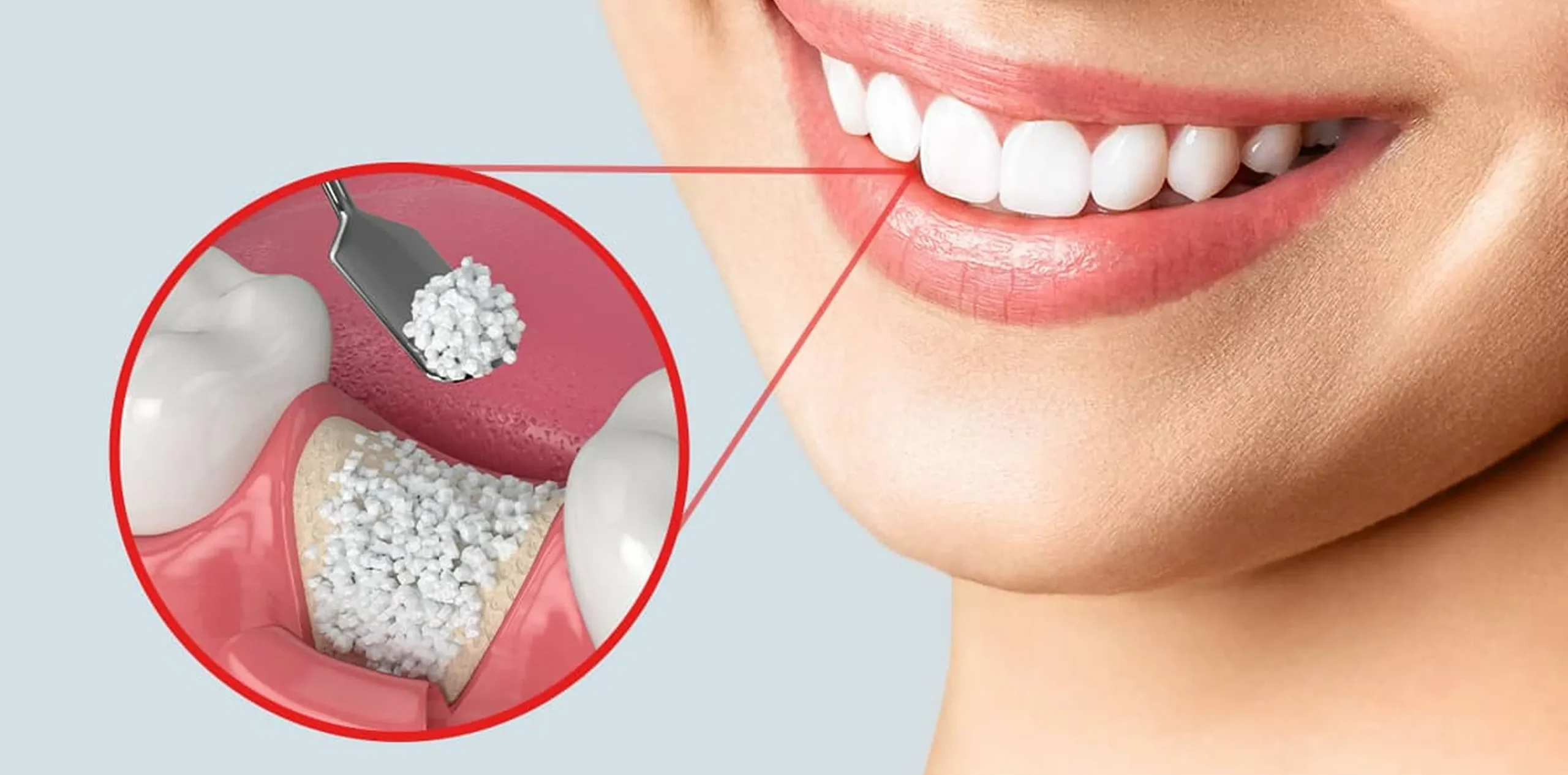
With particulate graft materials, a small number of grain-like particles may sometimes become noticeable during early healing without indicating failure. Larger or concerning changes should be discussed with the treating office.
Activity and Returning to Work
Return to work and routine activity depends on the procedure, physical demands, comfort, and individual instructions. Some patients resume non-strenuous activities sooner, while more involved treatment may require additional recovery.
A Realistic Healing Timeline
Early soft-tissue recovery is generally measured in days to a couple of weeks, while graft maturation may continue for several months depending on the site, procedure, and individual healing.
Signs You Should Call the Office
Worsening pain or swelling, drainage, fever, or concerning graft-material loss warrants contacting the office; review emergency dentistry in Westwood for urgent dental concerns. Severe swelling affecting breathing or swallowing, spreading facial swelling, high fever, or uncontrolled bleeding require immediate emergency medical care.
What Happens If a Graft Doesn't Take
A graft does not always integrate as intended. If healing is incomplete, professional evaluation can assess the site and determine whether additional treatment or a revised plan is appropriate.
From Bone Graft to Finished Implant: The Real Timeline
The timeline from grafting to final restoration varies by anatomy, procedure, and healing.
Why Graft Healing Can Take Months
Feeling recovered does not mean a graft has finished maturing. Soft tissues may improve well before bone formation and remodeling beneath the surface are complete. Some ridge- or sinus-augmentation sites may be allowed to mature for approximately 4–12 months before later implant placement, depending on individual needs.1 2
How the Treatment Sequence Can Vary
Depending on the case, treatment may progress from tooth extraction to bone grafting, healing, implant placement, further healing, and final restoration with a dental crown. Some stages may be combined, while others require separate appointments. You can contact Westwood Dental Esthetics to discuss which stages and estimated timelines apply to your treatment.
When Grafting and Implant Placement Happen in One Visit
In selected cases, grafting and implant placement can occur during the same surgical visit rather than as separate stages. Whether this approach is appropriate depends on factors such as available native bone, implant stability, defect anatomy, grafting requirements, and the overall treatment plan.
What Can Extend the Timeline
Projected timing can change when grafting is more extensive, treatment is intentionally staged, or biological maturation takes longer than initially anticipated. Site anatomy, healing response, additional treatment needs, individual health factors, and implant stability can also influence when the next stage is clinically appropriate.
What You’ll Have in the Meantime
A temporary tooth replacement may sometimes be possible while grafting or implant treatment progresses, particularly when appearance or function is a concern. Whether a temporary option is appropriate depends on the tooth location, graft site, treatment stage, bite, and overall restorative plan.
Bone Grafting Cost and Insurance in Westwood
Bone-grafting cost and insurance coverage depend on the procedure, treatment plan, and individual insurance benefits.
What Determines the Cost of a Bone Graft
The cost of bone grafting varies with the grafting approach, treatment site’s size and location, extent of augmentation, materials involved, and overall case complexity. Diagnostic and planning needs or another procedure performed as part of the treatment plan can also affect the estimate.
Socket Preservation vs. Later Ridge Augmentation
Socket preservation may be considered around the time of extraction to help limit ridge changes, while later ridge augmentation addresses the anatomy present when treatment is planned. Because these procedures can differ in scope and requirements, meaningful financial comparisons depend on the treatments actually proposed.
What Affects the Cost of a Sinus Lift
Sinus-augmentation costs can vary with the patient’s anatomy, extent of augmentation required, grafting approach, material requirements, and overall treatment complexity. Whether other procedures are involved can also affect the financial estimate, so there is no single fee that accurately represents every sinus-augmentation case.
How Dental Insurance May Apply to Bone Grafting
Westwood Dental Esthetics accepts many major PPO dental insurance plans, including Delta Dental, Aetna, Cigna, Humana, MetLife, and Guardian.[2] However, whether bone grafting receives an insurance benefit depends on the patient’s specific plan, procedure, exclusions, limitations, and circumstances surrounding the claim.
Questions Worth Asking Your Insurance Carrier
Before treatment, patients can ask whether the specific grafting procedure is a covered benefit, whether prior authorization or supporting records are requested, and how deductibles or annual maximums may apply. It is also useful to verify whether implant-related procedures have different plan limitations.
How Timing Can Affect Future Treatment Needs
Ridge anatomy can change after tooth loss, so treatment considered later may differ from what was appropriate at an earlier stage. Changes in the required procedure, treatment scope, or complexity can affect the financial estimate, but waiting does not automatically mean treatment will cost more.
Payment Options and Flexible Plans
Westwood Dental Esthetics can discuss treatment estimates, insurance coordination, and available payment and financing options. Financing arrangements depend on the applicable terms and individual circumstances, so availability or eligibility should be confirmed before treatment planning is finalized.
Alternatives If You'd Rather Not Have a Bone Graft
Bone grafting is not the only possible path when clinical findings support alternatives.
Shorter or Narrower Implants
Shorter or narrower implants can sometimes reduce or avoid augmentation when available bone is limited, but suitability depends on tooth position, available anatomy, loading, and restorative requirements.
Implants Placed to Use Available Bone
Implant planning may sometimes use existing bone without augmenting every deficient area, provided the planned position respects surrounding anatomy and supports implant stability, function, and the intended restoration.
Bridges and Partial Dentures as Graft-Free Options
Dental bridges and removable dentures and partials may replace selected missing teeth without requiring implant-site bone augmentation. Suitability depends on the patient’s restorative needs, remaining teeth, bite, and overall oral health.
What "No Bone Graft Needed" Advertising Does and Doesn't Mean
“No bone graft needed” can refer to clinically appropriate implant approaches in selected anatomy, but the phrase alone does not establish individual candidacy or determine which treatment plan is appropriate.
Choosing to Do Nothing: What to Expect Over Time
Monitoring a missing-tooth space may be reasonable in selected situations. Ongoing general dentistry can help monitor oral health, bite considerations, neighboring teeth, and changes in the area over time.
Book Your Bone Grafting Consultation in Westwood
If bone grafting has been recommended or you are trying to understand whether it may be relevant to your treatment, a consultation can clarify how grafting relates to your clinical findings and proposed plan. Westwood Dental Esthetics can discuss questions about an existing recommendation while serving patients in Westwood and nearby Los Angeles communities.
Westwood Dental Esthetics
- 1964 Westwood Blvd. Suite 250 Los Angeles, CA 90025
- Phone: (310) 475-1667
- Hours: Mon–Fri 8:00 am–5:00 pm | Sat–Sun Closed

Results vary based on each patient’s oral-health condition, treatment goals, and clinical needs. A professional consultation is required to determine appropriate treatment options.